
 Previous
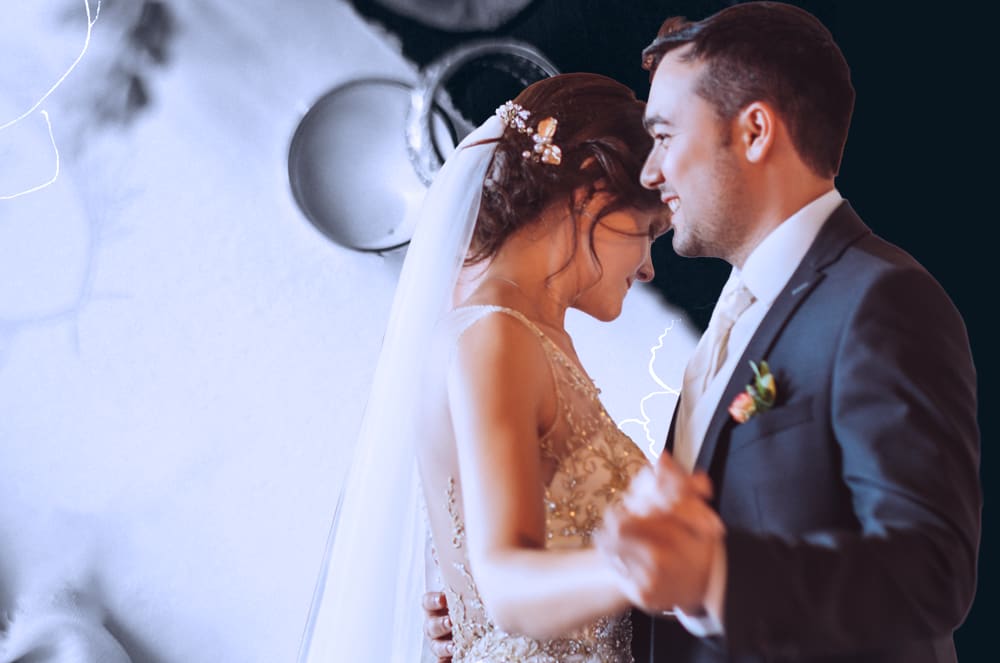
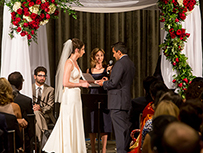
Weddings bring people together—not only a couple, but family and friends. A special and personal touch is when the couple writes their own vows to share in front of loved ones. When you write your own vows, the sky is the limit as to what you can include. You can touch on anything from your religious beliefs to references to a favorite author, from a humorous memory to a difficult experience.
Writing wedding vows is not as difficult as it may seem, but why should a couple consider writing their own vows? For one, personalized vows can often be the best part of the wedding day. They provide insight into your relationship for your guests, whether that’s highlighting your partner’s generosity and great sense of humor or sharing the moment you knew you were in love. Additionally, they serve as a memento of your special day, just like photos. You will always be able to reread your vows anytime you like.
Over the years I have witnessed many wedding vows, delivered my own 28 years ago, and professionally wrote wedding speeches. I have a good sense of what should and shouldn’t be included in a ceremony, and have helped couples make their big days exactly what they want them to be.
When you decide to write your own vows, there’s a lot you could include, so where do you begin?
Getting Started
The first thing the couple needs is some quiet time, a few hours where they can get together and talk about their relationship and their future and take notes for their vows.
A good way to collect ideas is for each partner to answer the following questions.
- How and where did you first meet?
- What was your dating/engagement journey like?
- Why do you love/admire your future spouse?
- When did you know you wanted to spend your life with them?
- What have you learned about life from your future spouse?
- What do you wish to bring to the marriage?
- What do you wish to receive from the marriage?
- What do you want the foundation of your marriage to be?
- What do you promise your future spouse?
- What do you want to thank your future spouse for?

Go through your answers and highlight phrases or sentences you want to include in the vows. You don’t have to use all the material you’ve collected; pick and choose from the ideas.
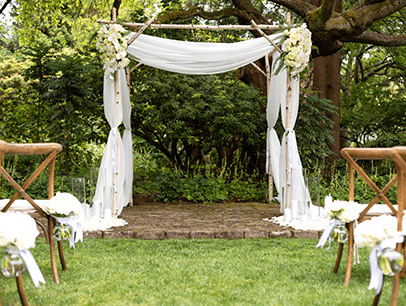
As you note what you want to share, consider your venue. If you are in a religious space, there may be certain language or stories you’d prefer to avoid or a religious passage you want to include. If you are having your ceremony outside, you might like to allude to the surrounding nature if you and your partner particularly enjoy being outside together, or maybe the space you will be in holds a special memory or meaning for the two of you—share that story in your vows.
Personalized vows can often be the best part of the wedding day.
Organize the Words
Each person’s vows should be anywhere from two to three minutes in length, or approximately 200-300 words.
You can start chronologically from the time you first met to the present day. Divide up the narrative, and take turns telling your “relationship story.” A good way to continue this kind of vow structure is to tell your family and friends what you promise to each other and/or on what you hope your marriage will be based.
For a different approach, base your vows on famous love quotes. A quote at the beginning of the vows can propel the complete vows forward to a logical ending.
For example, Willa Cather, an American author, said, “Where there is great love, there are always miracles.”
From this quote, the vows might proceed to one partner saying, “You are my miracle. Every day, you teach me to be a better person by your wonderful example.”
And then the other saying, “You are my miracle. Every moment, you teach me how to abide in joy.”
“I promise …”
“I promise …”
“Together we dedicate ourselves to each other.”
Using a quotation is a helpful guide, especially if you have a favorite quote about love.
Is there anything you shouldn’t mention in your wedding vows? In general, avoid “bedroom” humor, jokes at another’s expense, attacks on family members or friends, highly personal information, and long, rambling stories.
Practice, Practice, Practice
After you’ve written your wedding vows, read them out loud in front of people you trust and get feedback. If you want to keep the vows a surprise for your close friends and family, use your Toastmasters club. Practice at a club meeting and get feedback from members who may not be attending your wedding.
The Big Day
If you memorize the vows, your guests and your partner will be able to see your face and expressions a bit better. But writing your vows on notecards or in a small book is also perfectly fine if it eases your nerves. Just try to make occasional eye contact with your partner as you read.
To use a microphone or not to use a microphone? That’s up to you. If you can project your voice without a mic, go for it. But if you need the microphone to be heard, use one.
The venue may be a factor in this decision. If you’re in a large church, they may have microphones ready to go, the same with an outdoor venue. However, a smaller synagogue or wedding hall may allow for your guests to be close enough to you that they can hear just fine if you speak at a standard volume.
Wherever you are, if you decide to use a handheld mic and aren’t memorizing your speech, I recommend practicing while holding a microphone prop and your notes, so you aren’t juggling.
If you lose your composure, take a few deep breaths and look at someone who settles your nerves (most likely your partner). If you break into tears, the experience can be all the more meaningful. Ask for a glass of water, which you can keep off to the side. It’s okay to pause to collect yourself. It’s your special day and your family, friends, and partner won’t mind waiting to hear what you say next.
Writing and delivering your own vows can truly personalize your wedding. You’ll come to know and love your partner even more through the words you choose and recite.

Share this article


Laura Yeager is a writer and teaches writing at Kent State University at Stark, in Ohio, and online creative writing at Gotham Writers Workshop in New York. She is a cancer blogger at Cure Today, having survived two bouts of breast cancer. She previously worked as a wedding speechwriter.
 Previous Article