

 Previous
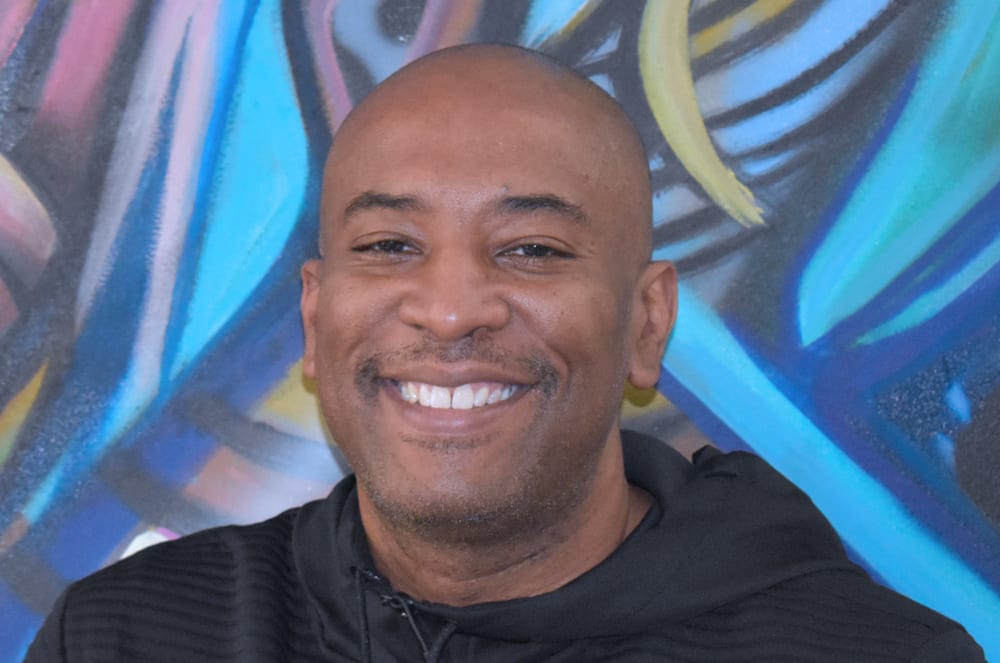
As an Atlanta-based African American artist, illustrator, and muralist, my work is all about bold color, movement, and storytelling. People often comment on the energy of the piece, but it took me quite a while to find my voice beyond the canvas.
I’ve spent decades telling stories through line, color, and form. But when it came to speaking about my work—whether to collectors, at gallery openings, or in front of a camera—I struggled. I could paint Atlanta’s soul on a 20-foot wall, but I couldn’t comfortably express that same passion in a five-minute talk. That changed when I joined the Gwinnett-Tucker Toastmasters Club, in Tucker, Georgia, in 2022.
Since then, I have developed speaking and leadership skills, and learned how to embrace discomfort. I now accept nervous energy and moments of doubt as part of my growth. Here are the four steps I took to find my voice.
- Translate your art into a story.
The first thing I learned was how to take the emotion behind a painting and turn it into a verbal narrative. When I created “Atlanta Reflections” in 2000, I wanted to show Atlanta’s culture, energy, and history all layered together. I wanted the colors and movement to reflect the rhythm of the city, the people, and the stories that make up Atlanta.
I had never practiced telling the story of my art, and I used “Atlanta Reflections” as the subject of one of my early Toastmasters speeches. I talked about the small apartment where I painted it, the masonite board I used, and how Atlanta became the heart of the piece. By breaking down my work into personal milestones, I was able to turn my art into a story I could confidently speak about.
- Use visual thinking.
Artists are visual thinkers. In Toastmasters, I learned how to apply that strength to communication. Rather than writing a speech word for word, I first sketch it out on paper using visual bullet points. This technique, known as mind mapping, involves creating a visual map of ideas or icons, or using cue cards with visuals, to guide my delivery.
I’ve also learned how to be more visual when communicating with others. For example, I use metaphors and similes to create imagery for my audience. I describe communication anxiety as trying to paint in the dark, and I explain leadership using mural techniques—layering, collaboration, and stepping back to see the full picture.
A picture is worth a thousand words—but sometimes those words still need to be spoken.
- Practice live speaking like live painting.
Since joining Toastmasters, I have started doing live painting events during gallery talks and in front of corporate audiences. As the image unfolds on canvas, I speak about the subject, history, and emotion.
Through this process, I realized that both public speaking and live art share similar principles. Both require you to prepare your materials, whether it’s speech notes or paint brushes, and know what message you want to convey. Then, you have to trust the process. You won’t always speak or paint perfectly but you have to keep going—even if you mess up. Lastly, you have to engage the audience; whether through color or voice, connection matters.
- Lead like an artist.
Three years after joining, in July 2025, I became the Club President of the Gwinnett Harbingers Toastmasters Club in Lilburn, Georgia. Serving in this role has added another layer of growth. Leadership, like painting, requires vision and innovation. You must see beyond the blank canvas—or the empty meeting agenda—and create something that inspires others.
Through this role, I’ve mentored speakers the way I once mentored young artists, by listening to them, delegating, and celebrating their progress.
Whether you’re painting, speaking, or managing teams, your voice matters. I once thought art and color were enough to speak for me. But in today’s world, the ability to communicate about your work is just as powerful as the work itself. Yes, a picture is worth a thousand words—but sometimes those words still need to be spoken.

Share this article


Corey Barksdale is an Atlanta-based visual artist and muralist whose work celebrates African American culture, history, and community. His work can be seen in murals, galleries, and public spaces across the United States. Learn more at barksdaleart.org or coreybarksdale.com.
 Previous Article
Related Articles

Profile